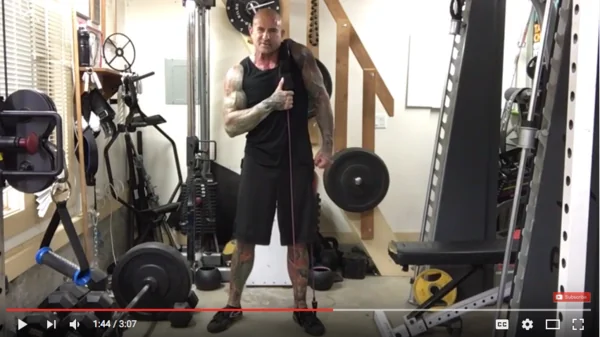
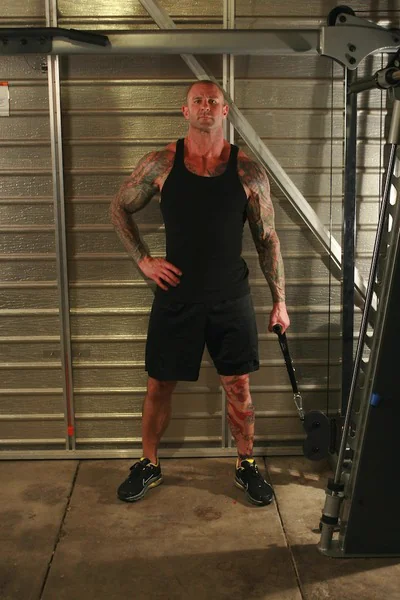
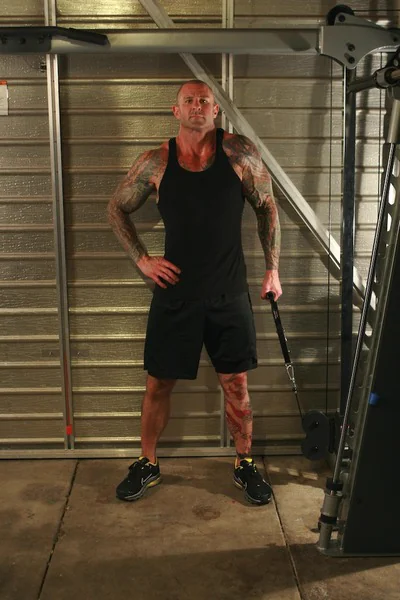
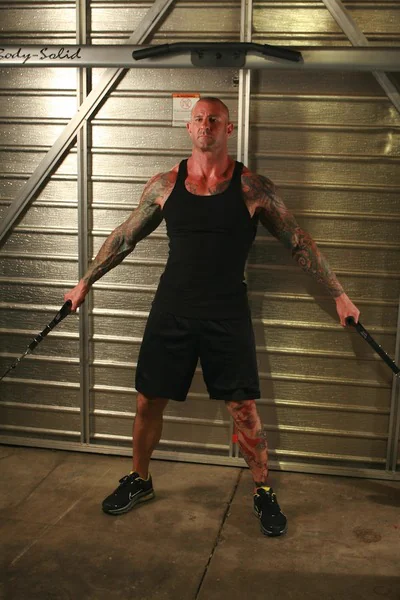
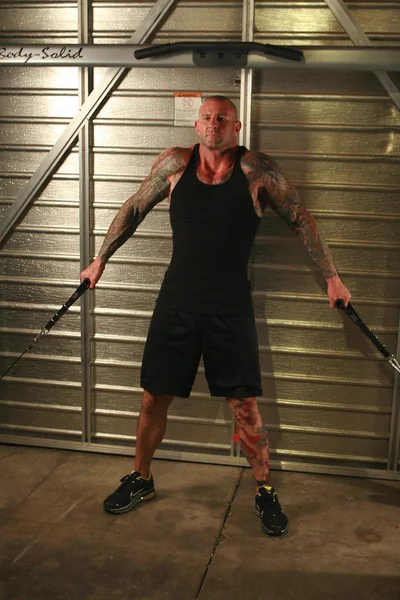
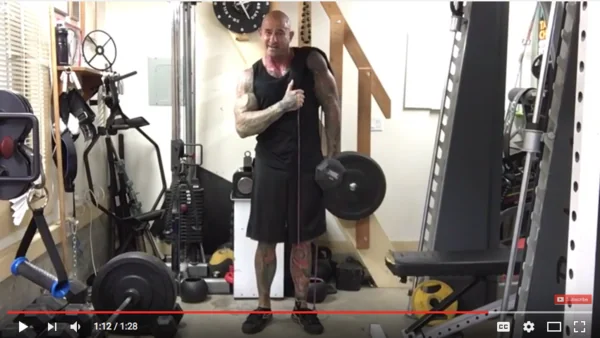
Take both handles and attach them to an immobile object then while facing away from the object lean forward slightly, and make sure their is enough tension in the band that it almost pulls you back. From the slanted position shrug your shoulders up and back squeezing the traps as you come up.
SHRUG
MOVE LIST · 22 VARIANTS
STANDING
14 VARIANTS
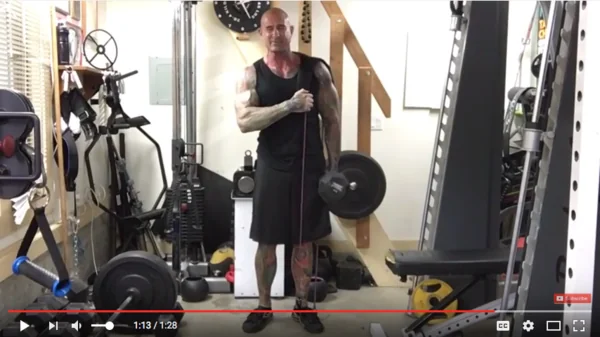
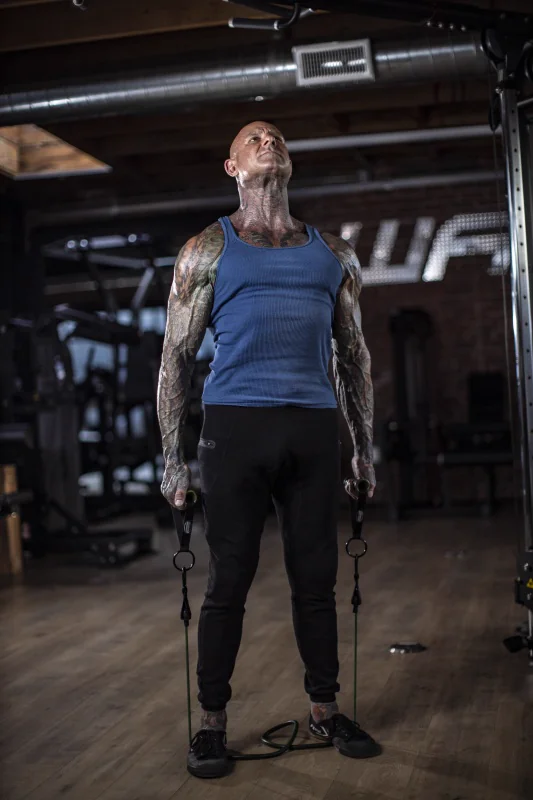
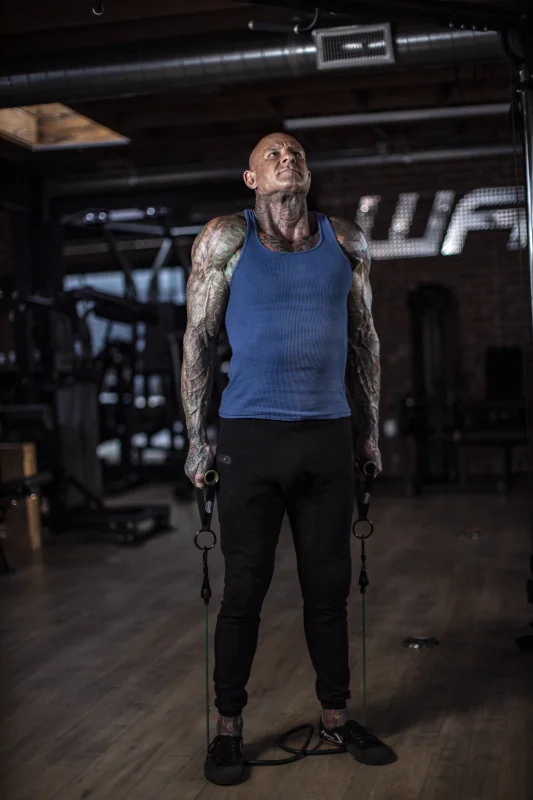
Stand on top of an exercise band with both feet using a shoulder-width stance or wider. Hold the handles of the band with a neutral grip with your arms extended down at the sides of your thighs. Contract your traps to shrug your shoulders up as high as possible holding the top position for a second as you contract your traps. Slowly lower your shoulders and repeat for reps. The wider you stand on the band, the greater the resistance will be. You may need to knot the band to make it shorter for adequate resistance on this exercise. You can also use multiple bands to increase the resistance. Tips Band shrugs can also be performed "hands free," as shown in the third photo below.
START: Stand with your right side facing a low cable pulley and maintain a shoulder-width stance while holding a single-handle D grip in your right hand.
MOVE: Shrug your right shoulder up toward your ear. At the top, pause for a moment and contract the muscles hard before slowly lowering the handle back to the start.
Grab the cable bar with both hands, your palms facing your thighs and your feet shoulder-width apart. Stand straight, keeping your arms fully extended, and start the exercise by shrugging your shoulders towards your ears, while keeping your arms still. Hold the peak position for a moment, feeling the contraction in your upper trapezius muscles. Slowly lower the weight back to the starting position, allowing your shoulders to fully extend downwards, and repeat the exercise for the desired number of repetitions.
START: Stand in front of a low cable pulley with a shoulder-width stance while holding a straight bar attached to the low pulley.
MOVE: Slowly shrug your shoulders up toward your ears. At the top, pause for a moment and contract hard through your traps and rhomboids before slowly lowering the bar back to the start.
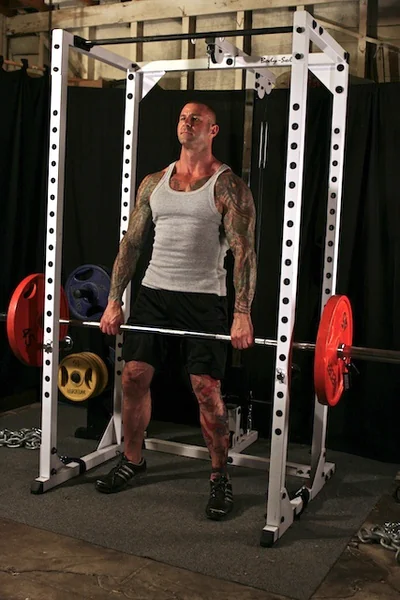
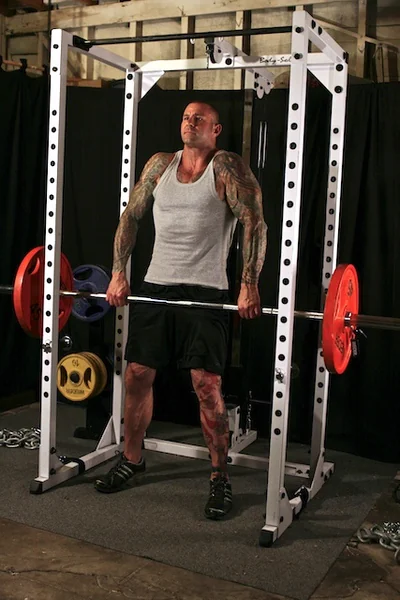
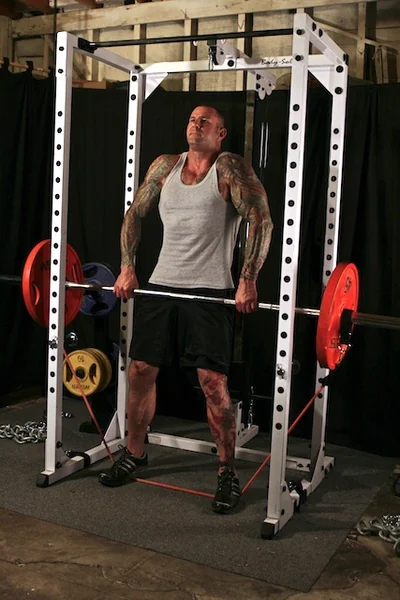
START: Stand holding a barbell with an overhand grip in front of your thighs. Both your hands and your feet should be spaced shoulder-width apart.
MOVE: Lift your shoulders up toward your ears as high as possible while keeping your arms straight. Hold the contraction for a second before lowering the bar back to the start.
Place the bar in front of your body. Place your hands shoulder width apart. Shrug the bar up using your traps squeezing at the top and slowly return the bar back down to mid thigh.
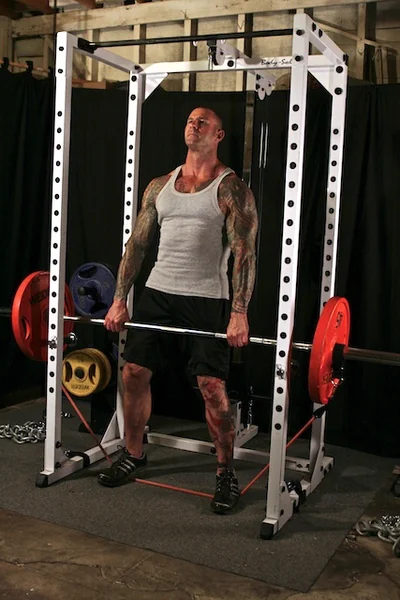
First Place a Band and attach either end to the ends of the barbell with the cuffs. Once secure step evenly onto the band with both feet and lift up on the barbell.
START: Stand holding a barbell with an overhand grip in front of your thighs. Both your hands and your feet should be spaced shoulder-width apart.
MOVE: Lift your shoulders up toward your ears as high as possible while keeping your arms straight. Hold the contraction for a second before lowering the bar back to the start.
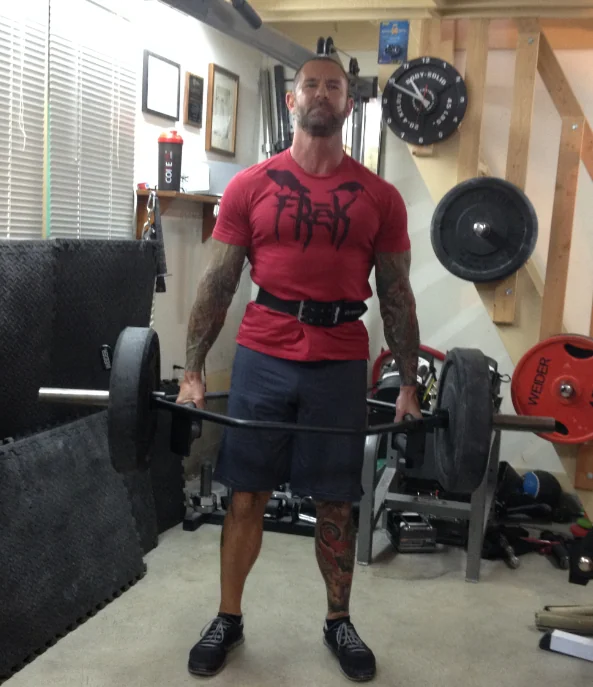
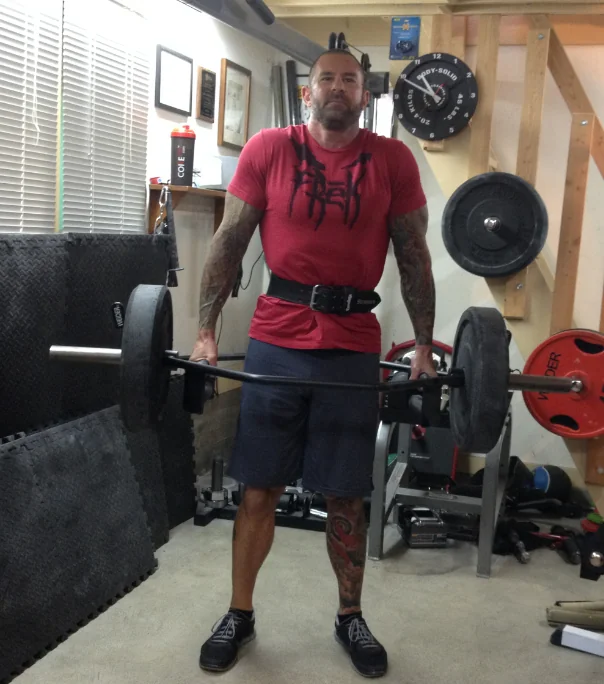
To do shrugs using a hex bar stand in the middle of a loaded hex bar while holding the handles with your arms extended down by your sides. Maintain a slight bend in your knees and focus on maintaining the natural arch in your lower back. Contract your traps to lift your shoulders up as high as possible and hold the top position for a second. Slowly lower your shoulders back down to the start position and repeat for reps.Hex bar shrugs are great way to work the traps different than with a barbell or dumbbell. This is because you use a neutral grip and your arms are spaced wider apart. While it is true that you use a neutral grip with the dumbbell shrug and you can use a wide grip with barbell shrugs, the hex bar shrug combines the neutral grip and wide hand spacing. It also prevents the bar from rubbing up against your body as happens with barbell and dumbbell shrugs. This fact makes the movement quite unique as one feels when they perform the exercise. Because the bar is not rubbing against the body, it is less stable and requires greater stabilization from your shoulder girdle and your core.
Stand holding a barbell with an overhand grip in front of your thighs using a grip outside of shoulder-width (wide grip). Lift your shoulders up toward your ears as high as possible while keeping your arms straight. Hold the contraction for a second before lowering the bar back to the start
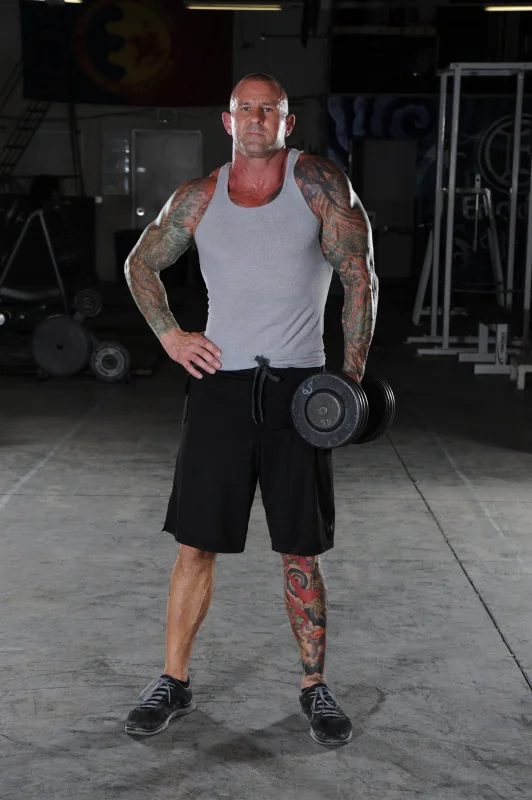
START: Stand with shoulder-width stance while holding a dumbbell in your right hand at your side. MOVE: Slowly shrug your right shoulder up toward your ears. At the top, pause for a moment and contract the muscles hard before slowly lowering the weight back to the start
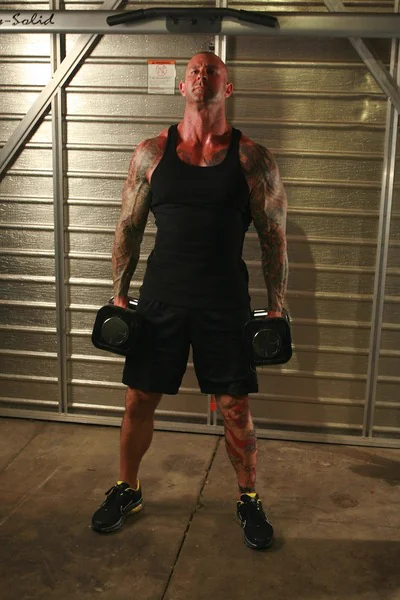
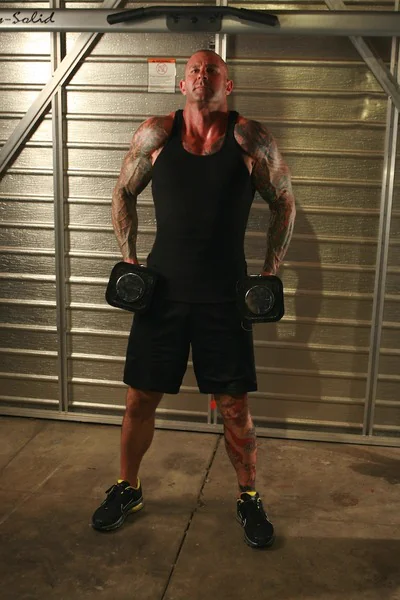
Take both weights in your hands. Shrug your shoulders up and back squeezing the traps as you come up.
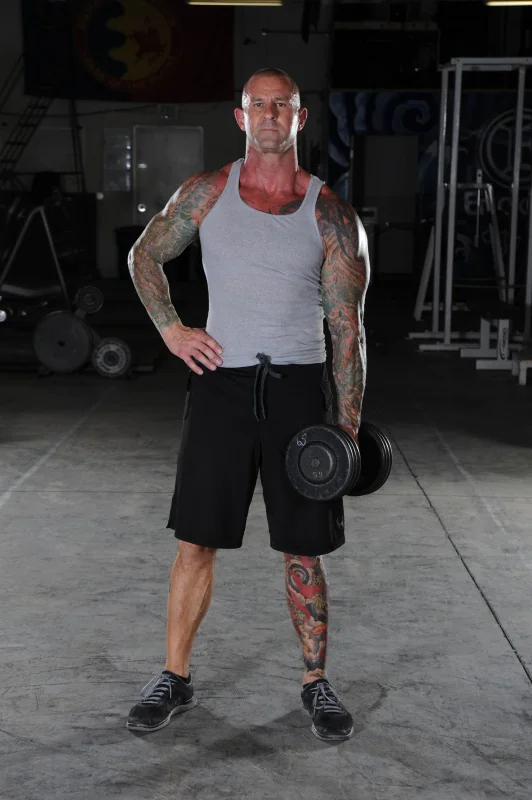
START: Stand with shoulder-width stance while holding a pair of dumbbells at your sides.
MOVE: Slowly shrug your shoulders up toward your ears. At the top, pause for a moment and contract hard through your traps and rhomboids before slowly lowering the weights back to the start.
Take a weight and both handles and stand on the band. Lean back slightly, and make sure their is enough tension in the band that it almost pulls you forward. From the slanted position shrug your shoulders up and back squeezing the traps as you come up.
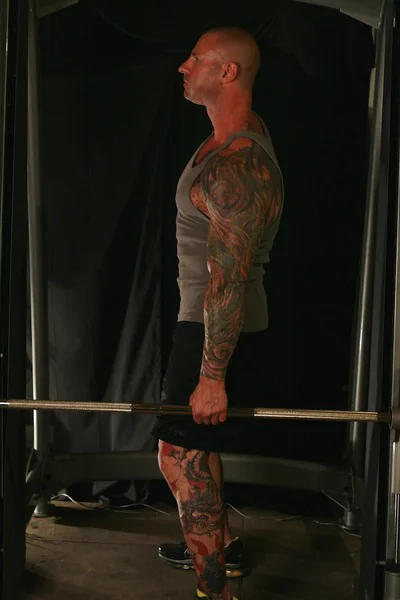
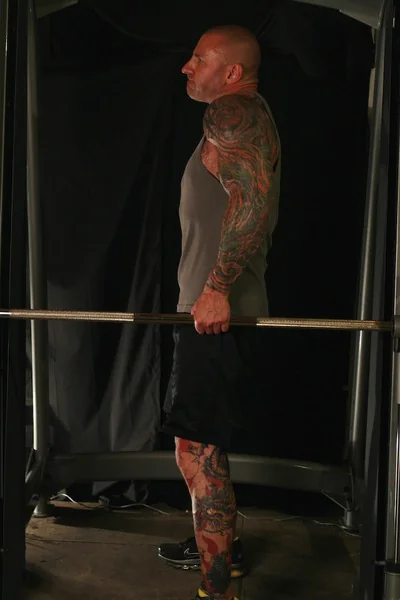
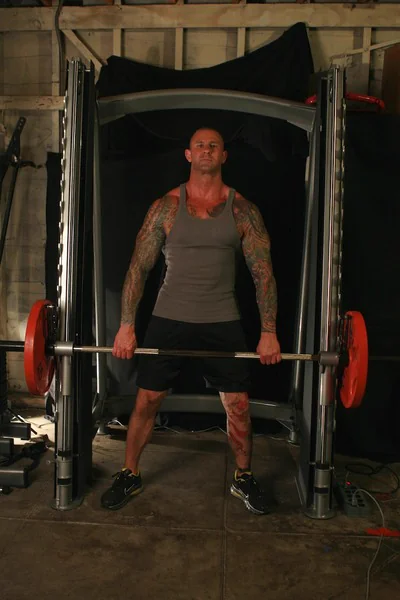
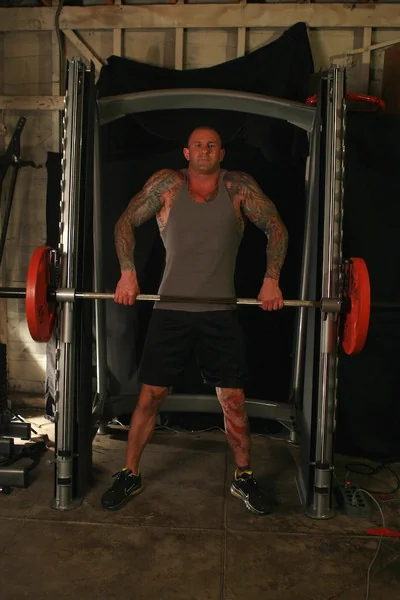
START: Stand in a Smith machine holding the unlatched bar with an overhand grip in back of your thighs. Both your hands and your feet should be spaced shoulder-width apart.
MOVE: Lift your shoulders up toward your ears as high as possible while keeping your arms straight. Hold the contraction for a second before lowering the bar back to the start.Once you finish all of the reps with one arm, switch directions and repeat with the other arm. Switch back an forth without rest in between sets until all reps and sets are completed
START: Stand in a Smith machine holding the unlatched bar with an overhand grip in front of your thighs. Both your hands and your feet should be spaced shoulder-width apart.
MOVE: Lift your shoulders up toward your ears as high as possible while keeping your arms straight. Hold the contraction for a second before lowering the bar back to the start.*Note: This exercise can be done with a staggered grip (one hand using an overhand grip and the other using an underhand grip).
Stand in the standing calf machine with the pads on your shoulders and keep a slight bend in your knees. Shrug your shoulders up as high as possible and hold this position for a second then slowly lower your shoulders back down and repeat for reps.
SEATED
2 VARIANTS
Seated on ball Take both handles and attach them to an immobile object. Lean back slightly, and make sure their is enough tension in the band that it almost pulls you forward. From the slanted position shrug your shoulders up and back squeezing the traps as you come up.
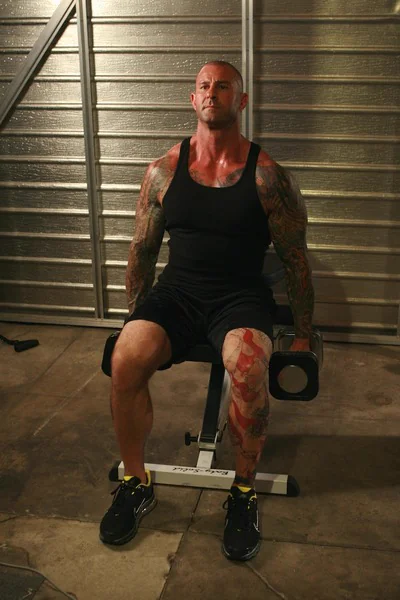
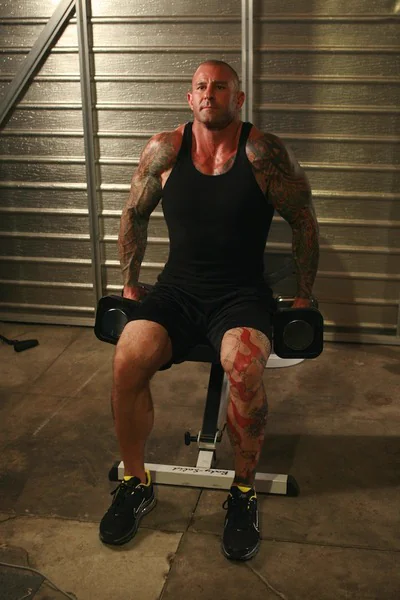
START: Sit on a flat bench and with your feet flat on the ground in front of you. Hold a pair of dumbbells at your sides with a neutral grip.
MOVE: Slowly shrug your shoulders up toward your ears. At the top, pause for a moment and contract hard through your traps and rhomboids before slowly lowering the weights back to the start.
PRONE
1 VARIANT
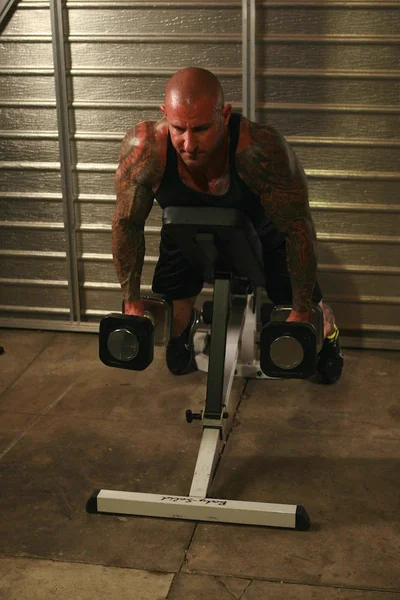
hey guys in this video I'm going to talk about doing the prone incline dumbbell shrug and what you can do for alternatives.
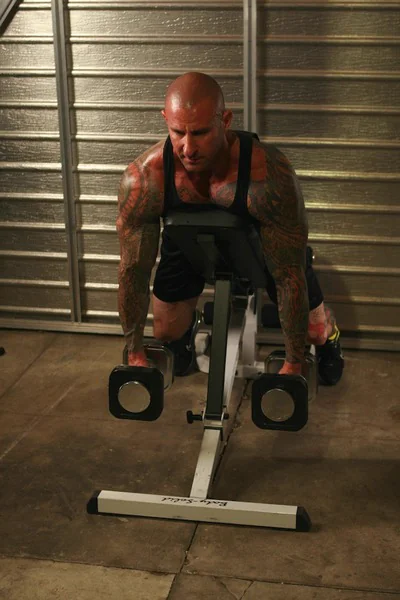
So let's break down the biomechanics first. Now the prone incline dumbbell shrug is basically done on an incline bench. You're going to be face down on an incline bench doing shrugs. How is it different from just standing and doing shrugs? Well with the body bent forward, the hands hang. Now, the line of pull is different on the traps. So, versus pulling this way, where I'm using more of my upper traps, with the body bent forward, the arms hanging down, now I'm using more of the middle traps. So this is a great way to build up thickness in the traps which adds to that middle trap here that you can see from the side.
So, to do the exercise, I recommend using straps so that you are focused on pulling with the traps, not with the hands. But here I'm going to use just an open grip. The same concept. I don't want to be pulling with the arms. So I'm going to place my chest right up to about my lower chest at the top of the bench, and then let my arms hang straight down. Here, keeping my arms straight, I'm simply going to shrug my shoulders up towards my ears and let my arms go back down. Just that short motion. Focus on squeezing those traps contracting them in the composition before you lower it back down.
START: Grab a pair of dumbbells and straddle an adjustable incline bench and with your feet flat on the ground in front of you. Hold a pair of dumbbells at your sides with a neutral grip.
MOVE: Slowly shrug your shoulders up toward your ears. At the top, pause for a moment and contract hard through your traps and rhomboids before slowly lowering the weights back to the start.
LAYING ON LEFT SIDE
1 VARIANT
Lie on the ground and with one arm grasp the handle and simply start out with your arm fully extended. Very slowly shrug the shoulder upward keeping the arm straight and pull the traps up towards the ear
LAYING ON RIGHT SIDE
1 VARIANT
Lie on the ground and with one arm grasp the handle and simply start out with your arm fully extended. Very slowly shrug the shoulder upward keeping the arm straight and pull the traps up towards the ear
LAYING DOWN ON ONES SIDE
1 VARIANT
STANDING ON ONE LEG
1 VARIANT
Take both handles and attach them to an immobile object then while facing away from the object lift one foot off of the floor and lean forward slightly, and make sure their is enough tension in the band that it almost pulls you back. From the slanted position shrug your shoulders up and back squeezing the traps as you come up.
SUPINE
1 VARIANT
Set up as for a table inverted row - on your back under a sturdy table, gripping the edge, body straight and arms extended. Without bending the elbows, pull your shoulder blades together and down so your chest rises an inch or two, pause, and release: a pure scapular squeeze.